The AI Talent War Comes for Google
Why the exits of Noam Shazeer to OpenAI and John Jumper to Anthropic became a market-moving signal about Google’s AI position.
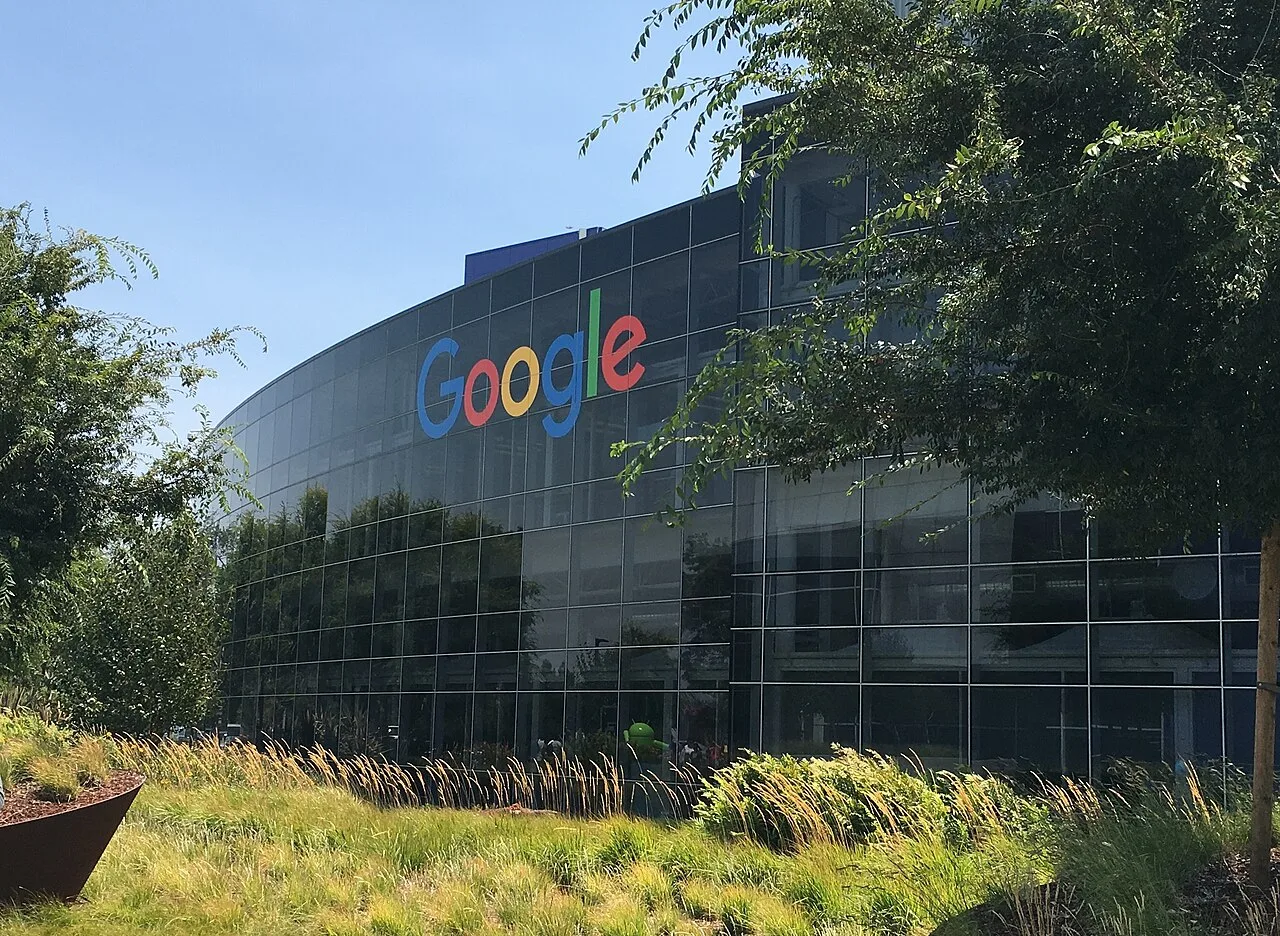
Google is not losing the AI race. But this week, investors were reminded that even Google can lose pieces of the race that matter.
Two high-profile exits put pressure on Alphabet’s AI narrative: Noam Shazeer, a Gemini co-lead, left for OpenAI, and John Jumper, an AlphaFold co-creator and Nobel Prize winner, left Google DeepMind for Anthropic.
Alphabet’s market value reportedly fell by roughly $225 billion to $270 billion, depending on the measurement window. That does not mean two people alone erased that much value. The market reaction was bigger than the departures themselves.
It was a warning about confidence.
In frontier AI, talent is not a soft asset. It is part of the moat.
What changed
Google has spent years holding one of the deepest AI benches in the world.
It helped invent the transformer architecture, built DeepMind, pushed AlphaFold into scientific history, developed TPUs, operates one of the world’s largest cloud platforms, and still controls massive consumer distribution through Search, Android, YouTube, Gmail, Chrome, and Workspace.
That is why the exits stung.
Shazeer leaving for OpenAI hits the model race. Jumper leaving for Anthropic hits the AI-for-science narrative. Together, they created a concentrated signal: rival labs are not just competing with Google’s products. They are competing for Google’s people.
Why the market cared
The market was not simply asking whether Google can replace two researchers.
It was asking whether Google’s structure still gives elite AI builders the best place to move quickly.
That is the real issue.
Google has extraordinary advantages, but also extraordinary complexity. Search must be defended. Ads must be protected. Gemini must compete. Cloud must grow. DeepMind must keep producing frontier research. Legal and regulatory pressure must be managed. Capital spending must be justified.
OpenAI and Anthropic have their own problems, but their pitch to talent is simpler: build frontier AI, move fast, and shape the next platform.
That simplicity matters.
The uncomfortable question
Google’s core challenge may not be capability. It may be conversion.
Can Google convert research leadership into product leadership?
Can it convert AI breakthroughs into revenue growth?
Can it convert compute spending into visible margin expansion?
Can it convert DeepMind’s prestige into durable commercial advantage?
Can it retain elite researchers who may prefer a frontier-lab culture over a giant-platform culture?
Those questions explain why a talent story became a stock story.
What this means for OpenAI
For OpenAI, hiring Noam Shazeer strengthens a pre-IPO narrative: the company can still attract top technical talent from the most powerful AI institutions in the world.
That matters because OpenAI’s valuation depends on more than ChatGPT usage. It depends on the belief that OpenAI can keep pushing the frontier, build durable enterprise products, and become a platform company before competitors compress the gap.
A high-profile Google hire supports that story.
What this means for Anthropic
For Anthropic, hiring John Jumper is different.
This is not only about chatbots or coding assistants. Jumper’s AlphaFold background points toward AI-for-science, biology, chemistry, drug discovery, and advanced research workflows.
Anthropic already has a strong enterprise and safety narrative. Jumper could help extend that into scientific AI, where trust, evaluation, and domain expertise matter more than consumer hype.
That is a serious strategic lane.
What this means for Google
Google still has enormous advantages.
It has distribution, infrastructure, data, revenue, cloud customers, research depth, and a balance sheet most AI labs cannot match.
But the market is starting to demand proof that those advantages are translating into dominance.
A company can have the best ingredients and still struggle with execution speed. That is the fear behind the reaction.
The Google story to watch is not whether Gemini is good. It is whether Google can turn AI into a visible growth engine quickly enough to offset investor anxiety about disruption to Search and rising infrastructure spend.
The watchlist
Watch for replacement signals. Does Google announce new AI leadership, expanded DeepMind responsibilities, or a clearer Gemini product structure?
Watch Gemini distribution. Does Gemini become visibly more embedded across Search, Workspace, Android, YouTube, and Cloud?
Watch Google Cloud AI revenue. The strongest rebuttal to the talent-loss narrative would be accelerating enterprise AI revenue.
Watch Anthropic’s scientific AI positioning. Jumper’s role will matter. If Anthropic starts leaning harder into biology, chemistry, or AI-for-science, this hire becomes more than symbolic.
Watch OpenAI’s pre-IPO talent narrative. Shazeer’s move strengthens OpenAI’s ability to tell investors it remains a destination for elite frontier-model builders.
Watch for more departures. One or two exits can be explained away. A pattern would be harder to ignore.
Bottom line
The market reaction to Google’s AI talent losses was not just about Shazeer or Jumper.
It was about a deeper concern: whether Google can still turn world-class AI talent into market-defining AI products faster than OpenAI, Anthropic, Meta, Microsoft, and the next wave of labs.
Google is still one of the strongest AI companies in the world.
But this week showed that in AI, even the strongest companies can be vulnerable when talent, narrative, and investor confidence move at the same time.
Related reading
- Google loses $270B in market cap over concerns it is falling behind rivals in AI talent
- Google Gemini co-lead Noam Shazeer leaves for OpenAI
- Nobel laureate John Jumper is leaving DeepMind for rival Anthropic
- Alphabet shares slide as AI talent exodus rattles investors
- Google DeepMind and A24 announce first-of-its-kind research partnership
Discussion
Join the conversation
Share your perspective on this story and discuss it with other readers.