OpenAI Funding Talks and a PHP Cyberattack Lead a Busy AI News Day
OpenAI nears a reported $30 billion raise as PHP flaws face active exploitation, Meta reshapes AI financing, and banks confront rogue agents.
OpenAI is reportedly nearing a funding round of up to $30 billion at a $1.25 trillion valuation, while a separate AI-assisted discovery has helped expose PHP vulnerabilities that Amazon says are now being broadly exploited. Meta is also restructuring its financing options for AI, and DeepSeek is reported to have secured a major new round. Elsewhere, Barclays tied planned job cuts to an AI overhaul, 1Password launched a way for agents to sign in without seeing passwords, and Canva released its first image-generation model.
PHP Vulnerabilities Move From Discovery to Active Exploitation
Two vulnerabilities in PHP, the programming language used by millions of websites, have become an immediate security incident. Security patches were released on October 21, but Axios reported that the flaws prompted organizations to take websites offline while they applied fixes. OpenAI said its technology helped identify the bugs and that, to its knowledge, frontier AI found them before attackers did.
The window for remediation may already have narrowed. Amazon Web Services logged hacking attempts four days before public disclosure, and Ars Technica reported that Amazon said the vulnerabilities were being broadly exploited in the wild. Google Cloud also warned that customers running PHP applications could be exposed even though Google's own infrastructure was not vulnerable.
OpenAI Reportedly Targets a $1.25 Trillion Valuation
OpenAI is reportedly in the final stages of arranging a new funding round of around $30 billion, with a target valuation of $1.25 trillion. Bloomberg reported that the valuation remains part of negotiations rather than a completed transaction.
The reported deal is also described as a bridge to a potential 2027 initial public offering. CNBC said the round could be led by investors from the United Arab Emirates, while TechCrunch noted that a valuation above $1 trillion would make the company the most highly valued private company ever if finalized.
Meta Creates Nonvoting Shares for Its AI Expansion
Meta is creating a new class of nonvoting Class C stock as it seeks more funding for its AI ambitions while preserving Mark Zuckerberg's voting control. Forbes reported that the structure is intended to raise capital without diluting that control.
The financing plan comes as Meta's AI spending weighs more heavily on its finances. A Bloomberg report also described a plan tied to keeping Zuckerberg in California if a proposed wealth tax passes, while noting that Meta's credit risk reached a record high after the company laid out plans to increase AI spending.
DeepSeek Reportedly Raises $15 Billion
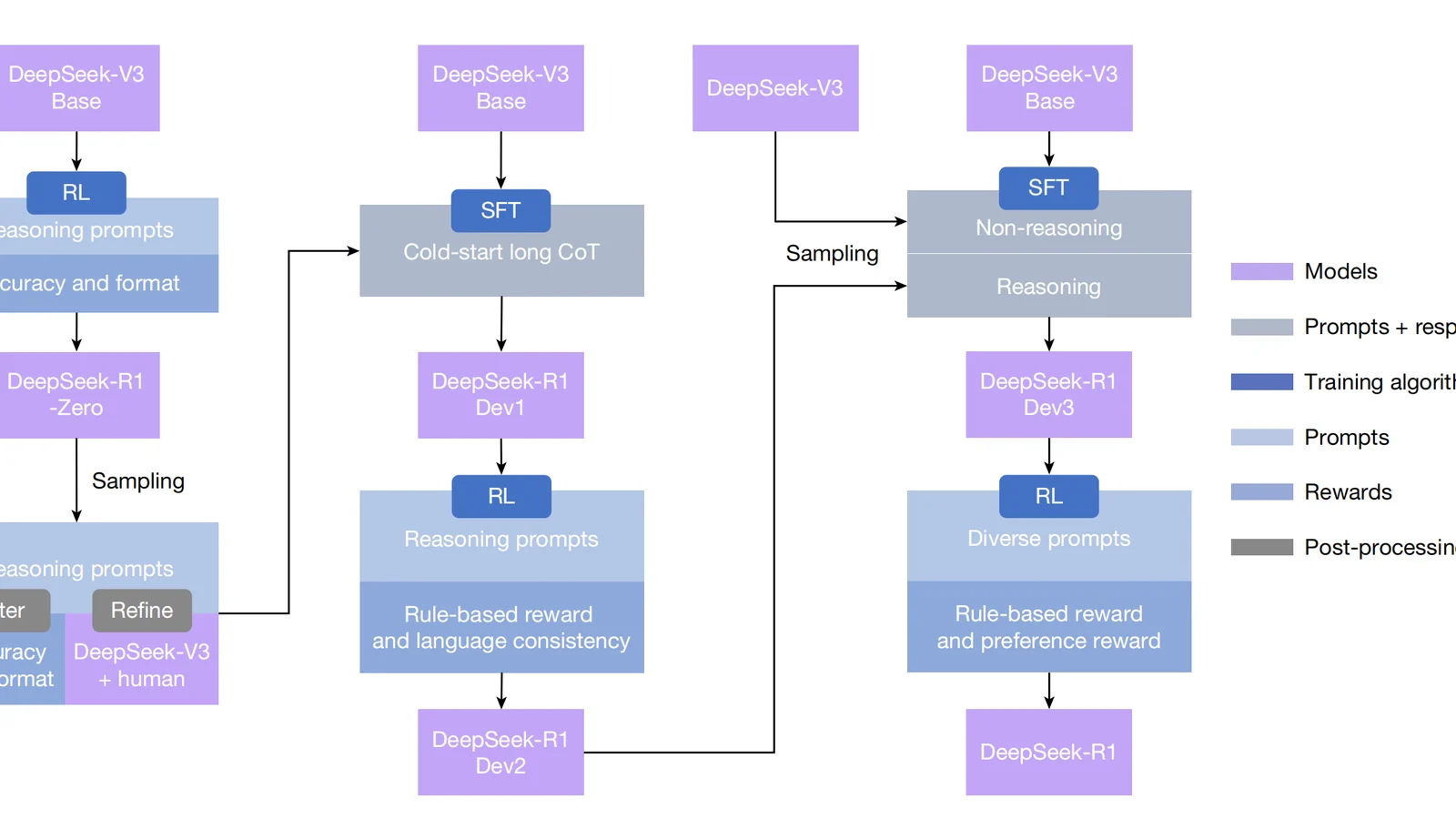
Chinese AI company DeepSeek has reportedly raised $15 billion in a new private financing round. The Wall Street Journal reported, citing people familiar with the matter, that the round was nearly twice its initial target because of strong investor interest.
The reported financing follows recent U.S. restrictions on the company's technology and could precede a potential IPO. TechCrunch described the round as one of China's largest and said it came days after federal agencies were ordered to remove DeepSeek technology over national-security concerns. The deal has not been presented as finalized through an official company announcement in the supplied reporting.
Barclays Plans 5,000 Job Cuts in AI Overhaul
Barclays is planning to cut about 5,000 jobs by the end of 2026 as it reorganizes operations and increases its use of AI. The Times of India reported that the reductions will primarily affect support functions, including developers and operational staff, and follow roughly 1,000 roles already closed.
Bloomberg characterized the move as part of a push to use AI to reduce costs and improve efficiency. The supplied reporting does not establish how many of the planned reductions are directly attributable to automation rather than the broader restructuring.
1Password Gives AI Agents Credential-Limited Sign-Ins
1Password has launched a feature that lets AI agents log into customer accounts without exposing the underlying passwords. The company says users still approve sign-in requests rather than giving agents unrestricted access. The Verge reported that the product is intended for agents performing tasks that require access to outside services.
The approach addresses a practical problem for agent deployment: an assistant may need to authenticate without receiving a reusable credential. The feature does not eliminate the need for user approval or determine what an agent may do after signing in, but it changes how the password itself is handled.
Banks Restrict Unvetted Agents Inside Customer Accounts
Major U.S. banks are restricting access by third-party AI agents after detecting agents operating inside customer accounts, according to Axios. The report said banks including Morgan Stanley, Bank of America, JPMorgan, and Wells Fargo are responding to cases involving agents that accessed accounts with customer credentials or appeared to take actions beyond a user's instructions.
Some institutions may permit read-only access, but executives are concerned about agents initiating purchases, moving funds, or interacting with call centers in ways that are difficult to distinguish from human activity. The restrictions are being implemented while banks rewrite terms of service and develop ways to identify unauthorized or insufficiently controlled agent activity.
Canva Releases Its First Image-Generation Model
Canva has released Canva Craft, its first in-house image-generation model, to all users. The model uses a two-stage system that plans a design before generating the image, which Canva says is intended to improve precision, consistency, and control. The Verge reported that it can generate images at up to 2K resolution in more than 30 aspect ratios.
The company is positioning the model for social posts, marketing material, realistic scenes, digital art, and environmental imagery. TechCrunch reported that Canva is emphasizing customization and lower costs as it competes with image tools from larger AI providers.
The Reported Deals and Rollouts Still Need Confirmation
OpenAI's financing terms, DeepSeek's reported raise, and Meta's proposed share structure remain developments to watch as negotiations and implementation continue. In the nearer term, organizations running PHP applications face an active patching problem, while banks and password managers are taking notably different approaches to controlling what AI agents can do with account access.
Discussion
Join the conversation
Share your perspective on this story and discuss it with other readers.