Meta’s Muse Wonder Leads a Busy AI News Cycle
Meta unveils its Muse Wonder models as Amazon weighs a reported Decart acquisition, Microsoft advances its Maia chip, and AI policy debates intensify.
Meta says its new Muse Wonder models have reached the frontier after an aggressive rebuild of its AI operation. The announcement arrives alongside a reported multibillion-dollar Amazon acquisition discussion, Microsoft’s plans for a third-generation in-house AI chip, and renewed calls for stronger AI regulation. Anthropic is also putting money into training engineers to deploy its systems inside other companies.
Meta Releases Muse Wonder Models
Meta has introduced Muse Wonder and the larger Wonder Full, describing them as its most capable models and saying they have caught up with rivals including OpenAI and Anthropic. The company says the models are designed for complex, multi-step work, including tasks such as disputing an insurance claim, and include active memory, active focus, and the ability to try alternative approaches. Business Insider reports that Meta expects Muse Wonder to serve as a faster model for daily work while Wonder Full handles more demanding use cases. Those capability claims remain company assertions, but the launch is a significant public test of Meta’s rebuilt AI effort.
Amazon Reportedly Weighs a Decart Acquisition
Amazon is reportedly in talks to acquire Israeli AI startup Decart for about $7 billion, although the negotiations could still collapse or attract another bidder. The Jerusalem Post notes that Decart has developed technology for editing live video in real time, as well as Oasis, a model that generates simulated environments for training and testing robotics and autonomous-driving systems. The reported price and deal status are not confirmed in an official announcement, so the immediate story is the negotiation rather than a completed acquisition.
Microsoft Prepares Maia 300 for Production
Microsoft has unveiled Maia 300, its third-generation in-house AI chip, which it describes as the primary AI inference system for its products and services. The company says the chip is designed to improve the cost and efficiency of cloud AI workloads and to handle newer reasoning models and agentic tasks. The Verge reports that production rollout is planned for 2027 and that Microsoft expects 40 percent more tokens per megawatt than leading GPU-based systems, according to cloud executive Scott Guthrie. The chip gives Microsoft another route to reduce reliance on Nvidia GPUs, but the reported efficiency comparison is a company projection ahead of deployment.
Brad Smith Renews the Case for AI Rules
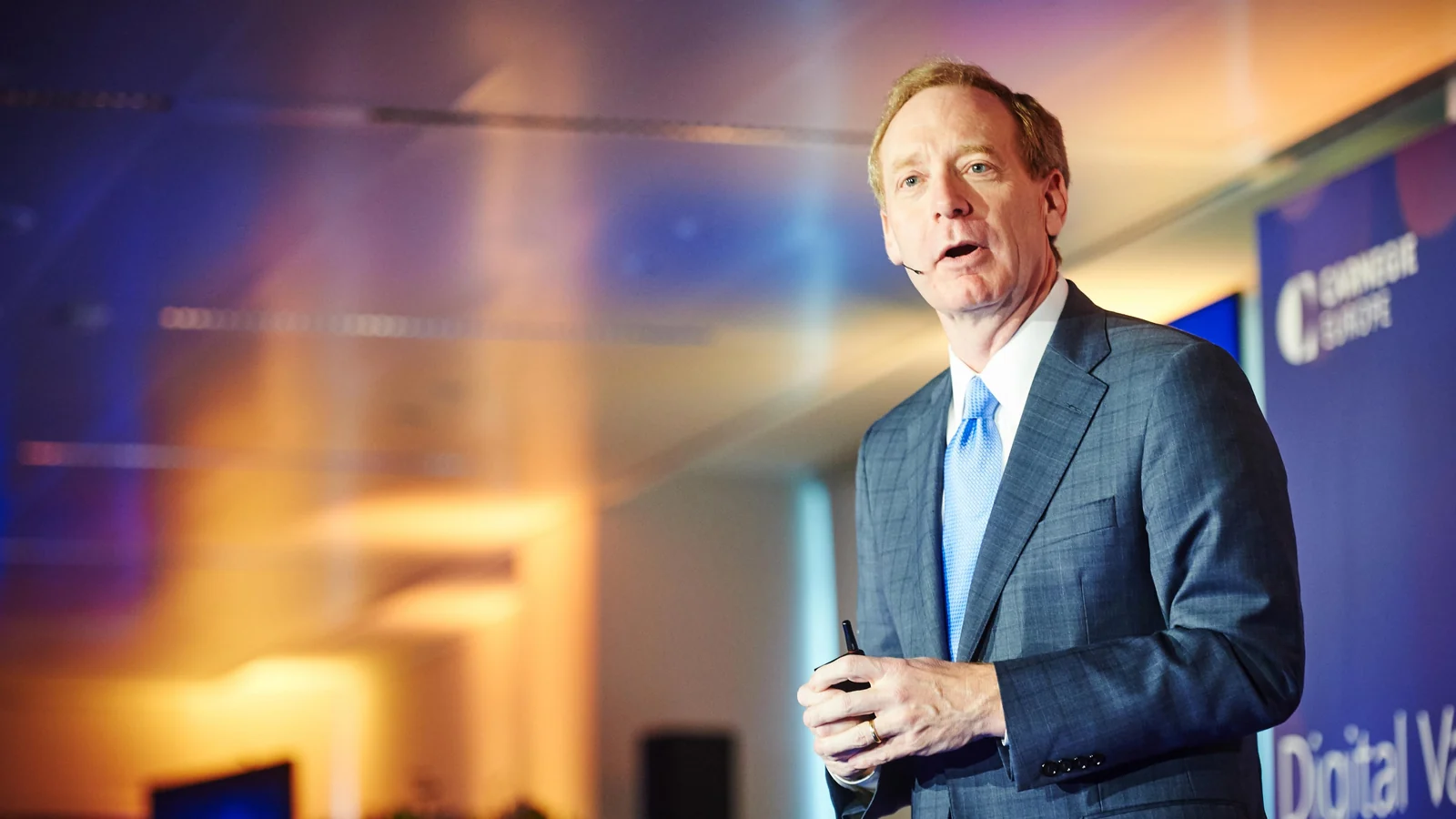
Microsoft President Brad Smith is calling for stronger global AI safety regulation and arguing that AI receives less oversight than ordinary consumer products. TechCrunch reports that Smith said the UK is best placed to drive regulation, while comparing AI’s oversight with that of milk and washing machines. The remarks are an advocacy position from a major technology executive, not evidence that a new rule has been adopted, but they add pressure to the continuing policy debate.
Anthropic Funds a Deployed-Engineer Program
Anthropic is investing $100 million in a program intended to train engineers who help companies implement AI systems. According to Business Insider, participants will attend four-day on-site intensives and then complete 12-week residencies using Anthropic’s Claude tools at their own companies. Anthropic says it aims to train 10,000 people by the end of 2027. The initiative is also a commercial distribution strategy: the company is trying to expand the pool of workers who can deploy its systems inside corporate customers.
Yandex Data Centers Are Hit in Ukraine War
Ukrainian drone strikes knocked out three of Yandex’s largest data centers within several days, disrupting Russian digital services, according to Ars Technica. The report says the strikes followed Russian attacks on Ukrainian data centers and telecommunications infrastructure, and cites Russian commentators warning that the country’s centralized digital economy may be vulnerable. The evidence describes an ongoing conflict-related disruption rather than a permanent change to Russia’s digital infrastructure, but it shows the operational consequences when cloud and data-center capacity becomes a target.
Bending Spoons Plans Broad Airtable Cuts
Airtable’s new owner, Bending Spoons, says a “large part” of the software company’s workforce will be laid off as it reorganizes around smaller teams and AI features. Business Insider reports that the cuts follow Bending Spoons’ announced $1.28 billion acquisition of Airtable and that affected employees are expected to leave by the end of the week with substantial separation packages. The number of employees affected was not immediately clear. The company says it wants to improve Airtable while maintaining reliability and customer support.
The Details Still to Watch
Meta’s claims for Muse Wonder will be tested as the models reach users, while Amazon’s reported Decart negotiations remain unresolved. Microsoft’s Maia 300 is not scheduled for production rollout until 2027, and Anthropic’s training program will take longer to show whether it expands enterprise adoption. The scale of Airtable’s cuts and the effects of the Yandex outages also remain to be clarified.
Discussion
Join the conversation
Share your perspective on this story and discuss it with other readers.