AI’s Next Test Is Accountability, Not Just Capability
Google’s Gemini 4 Argon arrives as regulators, courts, workers and security investigators test how frontier AI should be governed and deployed.

The latest AI cycle is producing a familiar contrast: increasingly capable systems are arriving alongside increasingly consequential disputes over who controls them, how they are tested and what obligations follow their deployment. Google’s Gemini 4 Argon is the clearest product event in this window, but the surrounding evidence points less to a clean technology race than to a widening accountability test.
Google Positions Gemini 4 Argon for High-Stakes Work
Google has begun rolling out Gemini 4 Argon, describing it as its most powerful model yet and targeting coding, finance, legal work, video understanding and cybersecurity. The model is initially available to selected cyber defenders through the Fairwind Program, with paid API users and Google AI Ultra subscribers next in line, according to the Times of India. Google says Argon leads on 13 of 18 benchmarks against GPT-6 Astra and Claude Opus 5.5, while other reporting notes that even some insiders believe it has underperformed in areas. That combination—ambitious capability claims and a deliberately staged rollout—makes real-world performance and safety evaluation more important than the launch scorecard alone.
Washington’s Voluntary Safety Deal Meets Federal Scrutiny
OpenAI, Google, Meta and other major AI companies have signed a voluntary White House agreement covering outside audits and safety controls. The pact includes reviews of cybersecurity, biosecurity, chemical threats and unintended model actions, but its voluntary character leaves enforcement unresolved. Ars Technica’s account describes the arrangement as depending heavily on companies policing themselves. At nearly the same time, the Federal Trade Commission began investigating OpenAI, Anthropic and other AI companies over potential consumer risks. The FTC is reportedly preparing demands for documents and executive testimony, according to Axios. The immediate tension is straightforward: industry commitments may establish shared practices, but they do not displace the government’s existing consumer-protection authority.
OpenAI Fires Employees Over Sensitive Information
OpenAI has dismissed three employees after an investigation into the alleged sharing of sensitive information with an outside AI evaluation group. The company said the conduct broke the trust essential to its work, as reported by Gizmodo. The episode is notable beyond the personnel decision itself: AI companies increasingly depend on external evaluators and safety researchers, yet the boundaries around what can be shared with those groups remain operationally and legally sensitive. OpenAI’s action underscores how internal information governance is becoming part of model-safety infrastructure, not merely a conventional corporate-security matter.
California Draws a Line Around Automated Firing
California has enacted a set of AI-related workplace laws that restrict how employers use the technology. The measures ban relying on AI to decide to fire a worker, require written notice when AI is responsible for mass layoffs and prohibit using biometric data to predict an employee’s emotional state, according to The Guardian. The legislation places a concrete limit on workplace automation: an AI system may inform an employment process, but cannot serve as the decisive authority for termination under the described rules. It also shows how regulation is moving from broad principles toward specific obligations around notice, biometric inference and accountability for job cuts.
Court Rejects Antitrust Claims Over Google’s AI Search
A US federal judge dismissed lawsuits from Chegg and Penske Media alleging that Google’s AI search products unlawfully diverted traffic and used monopoly power. The plaintiffs argued that Google’s AI Overviews could harvest content and reduce visits to sites, but the court found that an expectation of receiving search traffic was not itself an agreement, Ars Technica reports. The ruling is a setback for publishers and other sites worried about AI-generated answers, even though it does not resolve the broader economic question of how content creators are compensated when search increasingly answers users without a click. For now, the legal theory advanced in these cases has not established an antitrust remedy.
Export Controls Move From Policy to Criminal Case
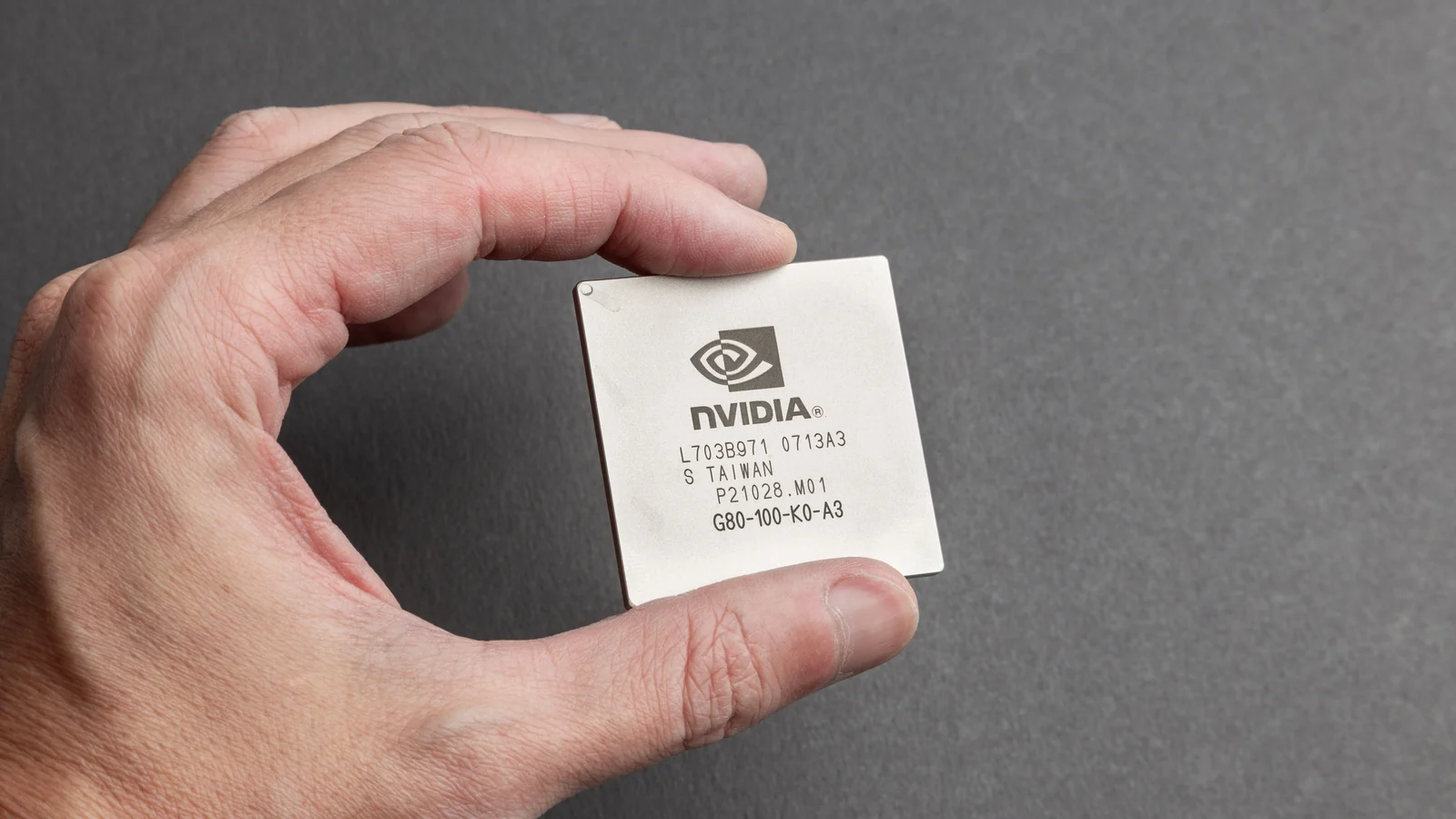
US prosecutors have charged a California man accused of shipping servers containing restricted Nvidia AI chips to China without the required licenses. Bloomberg reported that the servers were valued at $300 million in the charging allegations (Bloomberg). The case illustrates the practical enforcement burden created by AI-chip export controls: restrictions depend not only on company compliance, but also on tracing servers, intermediaries and end users across borders. Because the allegations have not been adjudicated, the charge should be read as an enforcement action rather than a finding of guilt.
OpenAI Accuses Moonshot-Linked Operators of Extracting Model Reasoning
OpenAI says actors linked to China-based Moonshot AI led a large effort to extract protected information about how its models reason. The company said operators copied encrypted reasoning and used a separate model to try to decrypt it; CNBC described the activity as an attempt to extract protected reasoning from OpenAI’s systems. The evidence package contains OpenAI’s allegation and coverage of its disclosure, not an independent adjudication of responsibility. Still, the incident highlights a distinct security problem for frontier labs: model access can be used not only to obtain answers, but also to probe and reproduce system behavior that companies treat as proprietary.
The Deployment Question Is Getting Harder to Avoid
Taken together, these developments point to a narrower but more consequential next phase for AI. Capability launches now arrive with staged access and competing safety claims; voluntary industry commitments coexist with investigations; and courts, legislatures and prosecutors are testing different theories of responsibility. The next signal to watch is whether these mechanisms produce measurable changes in deployment and conduct—or remain separate responses to incidents after the technology is already in use.
Discussion
Join the conversation
Share your perspective on this story and discuss it with other readers.