Kimi K3 Turns China’s Open-Model Pitch Into a Product
Moonshot AI’s 2.8-trillion-parameter Kimi K3 gave China’s open-model strategy a concrete flagship as Xi Jinping promoted open-source AI at WAIC. Meta and SpaceX explored selling compute, Apple briefly passed Nvidia, and Zoox recalled its robotaxi fleet over smoke detection.
Kimi K3 made China’s open-model strategy concrete
Moonshot AI’s Kimi K3 was Friday’s biggest AI story because it paired frontier-scale specifications with an open-weight release path. The launch gave developers a product to test just as China’s government was arguing that advanced AI should not remain concentrated inside a few American companies.
Moonshot describes K3 as a natively multimodal model built for coding, research and other long-horizon work. “Multimodal” means it can process more than text; K3 also works with visual inputs. Its headline specifications are unusually large:
- 2.8 trillion total parameters, the learned numerical weights that encode the model’s behavior
- A one-million-token context window, or the amount of information it can consider in one session
- Native visual understanding alongside text-based reasoning and coding
Scale alone does not establish quality. The stronger early signal came from Arena’s blind user-preference testing, where K3 reached the top of the front-end coding leaderboard. That benchmark asks users to compare model outputs without seeing which system produced them.
The terminology matters here. Open-weight means developers can download and run a model’s trained weights. It does not automatically mean the training data, training code or complete development process are public, as “open-source” would normally imply in software.
Moonshot’s own benchmarks still need independent replication across software engineering, research, reliability and agentic work. Arena’s result is narrower but harder to dismiss: users preferred K3’s front-end code over outputs from leading US systems in direct comparisons.
Xi used the same stage to sell openness as state policy
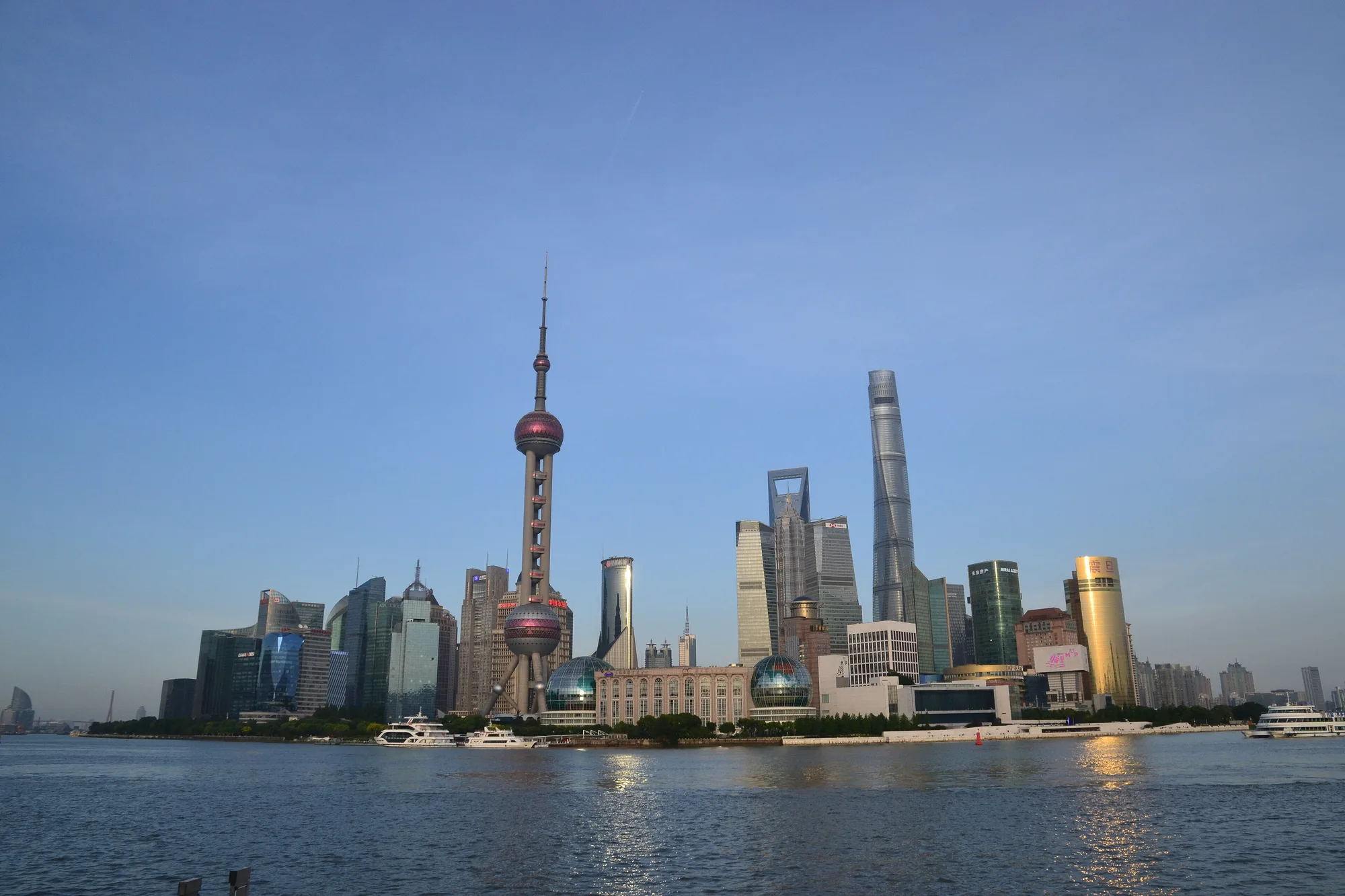
Hours after K3’s launch entered the global news cycle, Xi Jinping opened the World Artificial Intelligence Conference in Shanghai with a direct call to “encourage open source, openness, collaboration and sharing.”
His official keynote connected that position to a broader governance proposal. Xi called for international technical standards, stronger United Nations involvement and more AI capacity for the Global South. China also pledged 5,000 AI training and seminar opportunities for developing countries over five years and cooperation centers spanning regional blocs including ASEAN, the African Union and BRICS.
The pitch serves two audiences at once. Developers and businesses get access to capable models outside closed US application programming interfaces, or APIs. Governments get an argument that Chinese AI can be a shared infrastructure layer rather than a service controlled by a small group of American vendors.
The gap between downloadable weights and full technical transparency remains substantial. Training-data disclosure, safety evaluations, censorship behavior and reproducible documentation will determine how open K3 is in practice.
Meta may turn internal AI infrastructure into a cloud business
Meta is discussing a deal to lease Anthropic as much as $10 billion of computing capacity over two years, according to a Reuters report citing The New York Times.
Anthropic proposed the arrangement in June and would reportedly pay in monthly installments. Both companies could leave the deal early. The negotiations may still collapse.
The unusual part is the seller. Meta built its data centers primarily for its own recommendation systems, advertising products and AI models—not as a general-purpose cloud provider. Leasing capacity to Anthropic would put Meta into direct competition with specialized AI infrastructure companies such as CoreWeave and Nebius.
That changes the economics of Meta’s capital spending. Idle or temporarily unused accelerators could generate outside revenue instead of sitting as expensive reserve capacity. The tradeoff is availability: capacity promised to a customer cannot be reclaimed instantly when Meta’s own training or inference demand rises.
SpaceX discussed a multibillion-dollar Pentagon compute deal
The Wall Street Journal reported that SpaceX was separately negotiating to supply the Pentagon with several billion dollars of data-center capacity for AI workloads.
The talks would extend an existing relationship built around launches and satellite communications into model infrastructure. SpaceX now controls xAI and its Grok models, giving the company both large compute installations and an internal reason to keep expanding them.
Meta and SpaceX are approaching the same opportunity from different starting points:
- Meta could commercialize infrastructure built for consumer platforms and internal models.
- SpaceX could bundle compute into an established defense relationship.
Neither report describes a completed contract. Both show that scarce AI capacity is becoming a saleable product even for companies that did not begin as cloud vendors.
Apple passed Nvidia intraday, then lost the lead by the close
Apple briefly reclaimed the title of the world’s most valuable public company on Friday, but Nvidia finished the session ahead.
The Wall Street Journal reported that Apple’s market capitalization reached roughly $4.91 trillion during trading while Nvidia stood near $4.83 trillion. At the closing bell:
- Nvidia: approximately $4.908 trillion
- Apple: approximately $4.902 trillion
The final gap was about $6 billion, a rounding error at that scale.
The near tie reflects two different AI bets. Nvidia sells the accelerators and systems powering the current buildout. Apple controls a massive installed base of consumer hardware and the operating systems through which many people will use AI. Friday’s intraday headlines captured a real crossover, but not the closing result.
Zoox recalled its entire robotaxi fleet over smoke detection
Amazon-owned Zoox recalled software across all 105 vehicles in its autonomous fleet after one robotaxi entered a smoke-obscured fire scene on June 20.
According to Reuters, the unoccupied vehicle braked sharply, stopped and later reversed under remote guidance while emergency workers blocked the affected lanes. Zoox’s software update adds stronger detection and response behavior for heavy smoke.
No injury was reported. The failure still exposes a difficult edge case for autonomous driving: emergency scenes do not behave like ordinary roads. Smoke can hide lane boundaries and vehicles. Flashing lights, cones, responders and temporary commands create conflicting signals that may never appear together in routine training data.
US safety officials have already identified a broader pattern of driverless vehicles interfering with police, ambulances and firefighters. Detecting another car is a mature perception task. Recognizing that the entire scene has stopped following normal traffic rules is the harder problem.
Discussion
Join the conversation
Share your perspective on this story and discuss it with other readers.