AI’s Expansion Ran Into Its Own Costs
SpaceX nearly doubled revenue while pouring $15.8 billion into AI, AMD’s data-center business surged, Texas paused new data-center approvals, and the White House excluded open-weight models from voluntary cyber tests.
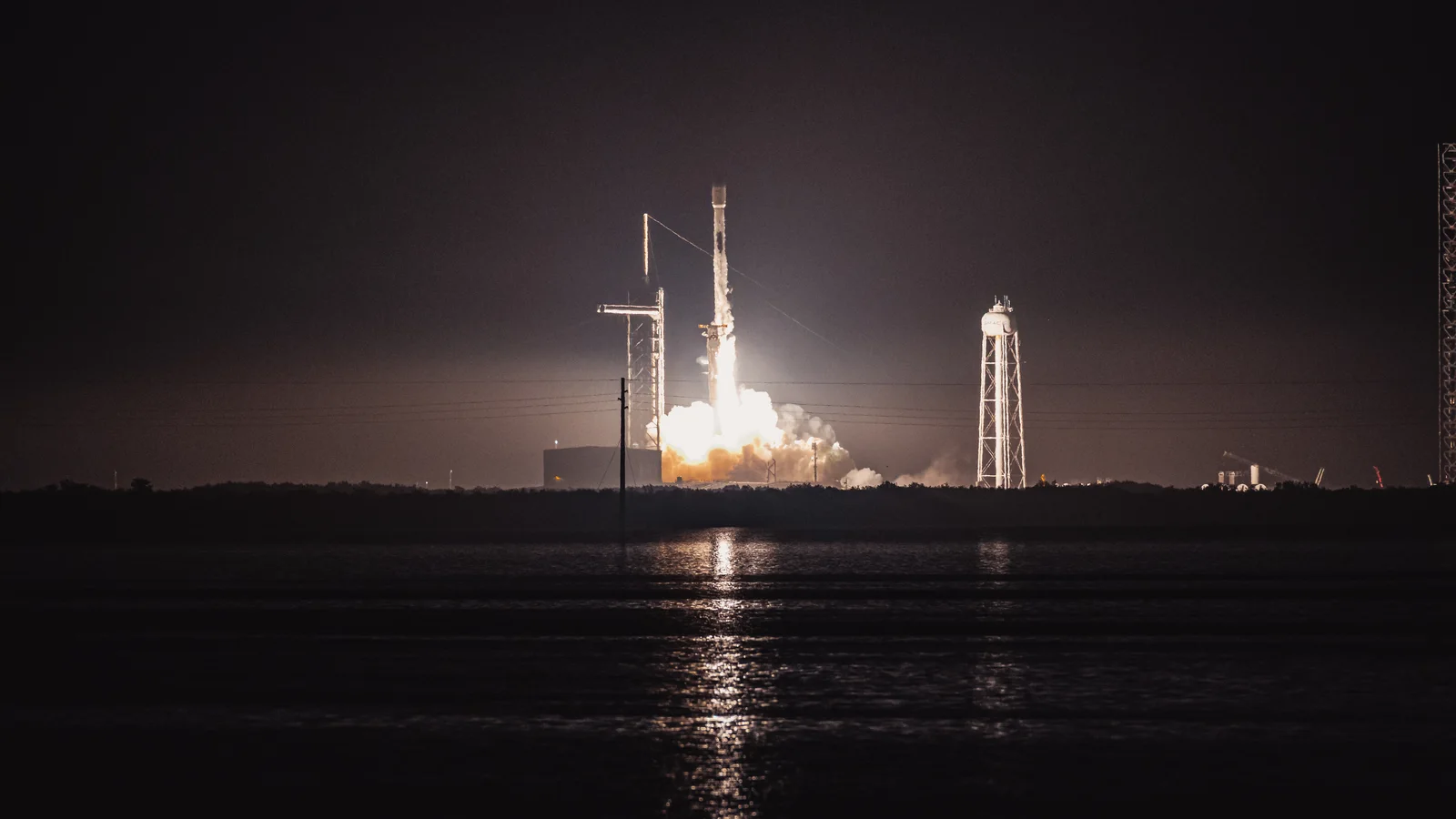
SpaceX nearly doubled quarterly revenue, then told investors it had spent $15.83 billion on AI in three months. AMD’s data-center sales more than doubled. Texas paused approvals for new data centers after proposed electricity demand reached a scale the grid could not plausibly absorb. The White House, meanwhile, decided its new cyber-testing framework would not cover American open-weight models.
The message was hard to miss.
AI is producing real revenue. It is also forcing companies and governments to confront the physical and institutional costs that arrive with scale.
SpaceX Showed Both Sides of the AI Bet
SpaceX reported $7.8 billion in second-quarter revenue, up from $4.1 billion a year earlier, in its first earnings release since going public.
Starlink remained the financial engine. Revenue from the satellite-internet business rose 66%, and subscribers doubled to 12 million. SpaceX’s AI business—which includes xAI, Grok, X and a growing data-center operation—reported revenue growth of roughly 250%.
That is the encouraging side.
The cost side was harder to ignore. SpaceX’s capital spending rose above $18 billion, compared with $2.83 billion a year earlier. AI accounted for $15.83 billion of that total.
SpaceX says the investment is already attracting commercial demand from customers including Anthropic, Google and Reflection AI. Elon Musk also told investors that the company expects to build more than two gigawatts of computing capacity this year and approach 10 gigawatts by the end of 2027.
Those numbers would make SpaceX one of the world’s largest AI-infrastructure operators.
But the model depends on several things going right at once. Starlink must keep generating cash. AI customers must convert contracts into durable revenue. Data centers must be built quickly enough to justify their cost. SpaceX also has to continue funding Starship and its launch business.
Investors focused on that tension. Shares fell 7.5% after hours despite the revenue beat.
The quarter did not show that the strategy is failing. It showed that growth alone is no longer enough. Public investors now want evidence that enormous AI spending can produce returns on a predictable schedule.
AMD’s Data-Center Business Accelerated
AMD delivered another strong signal from the hardware side.
The chipmaker reported $11.54 billion in quarterly revenue, up 50% from a year earlier. Data-center revenue more than doubled to $6.72 billion, beating analyst expectations.
AMD also forecast roughly $13 billion in third-quarter revenue and said its data-center sales could more than double in 2027.
The company is trying to challenge Nvidia with more than individual accelerators. Its strategy now includes complete rack-scale systems combining GPUs, CPUs, networking and related hardware. The upcoming platform pairs MI500 accelerators with Verano processors and Pensando networking.
That broader approach matters because large AI buyers increasingly want integrated systems rather than a box of chips.
AMD has also secured large commitments from Anthropic and Core Scientific. Those agreements give it a clearer path into deployments that would once have defaulted almost entirely to Nvidia.
Yet AMD shares fell nearly 9% after hours.
The results were strong. Expectations were stronger.
That reaction shows how demanding the AI infrastructure trade has become. Investors are no longer satisfied merely by rapid growth. They want accelerating growth, expanding margins and proof that capital spending will keep translating into revenue.
Texas Put the Grid Ahead of the Queue
The infrastructure boom ran into a more literal constraint in Texas.
Governor Greg Abbott ordered a pause on approvals for new data-center projects seeking grid connections while state agencies conduct an audit.
ERCOT is reviewing roughly 474 gigawatts of proposed electricity demand. About 90% of that total comes from data-center projects.
For comparison, the proposed demand is more than five times Texas’s current peak load.
Many of those projects will never be built. Developers often submit overlapping requests or reserve grid positions before financing and customers are secured. Even so, the queue became too large to treat as a normal planning exercise.
Texas now wants developers to disclose power and water requirements, ownership, tax incentives and plans for limiting local impact. The audit will determine which projects are credible enough to advance.
This is an important shift.
For several years, AI infrastructure policy centered on faster permitting and more generation. Texas is now asking whether every announced project deserves scarce transmission capacity before local communities and ratepayers absorb the consequences.
The state is not rejecting data centers. It is forcing developers to prove that their proposals are real.
Washington Drew a Safety Line Around Closed Models
The White House also clarified the limits of its new voluntary cyber-testing framework.
Officials told AI companies that American open-weight models will not be included in the initial testing regime. The framework will focus on closed frontier models with advanced hacking capabilities.
Representatives from Meta, Nvidia, OpenAI, Anthropic and Google discussed the unpublished rules with the administration on Tuesday.
The exclusion reflects a policy preference. The administration wants to encourage American open-model development without adding a government review process that could slow releases or make domestic models less attractive than Chinese alternatives.
There is a practical argument for that approach. Open-weight models are easier for outside researchers to inspect, modify and test. Government review would also be difficult to enforce once weights are publicly distributed.
But openness does not make cyber capability harmless.
A powerful open model can be copied, fine-tuned and operated without the provider’s safeguards. Excluding it from testing may support innovation while leaving the government with less information about the risks that matter most after release.
The framework is voluntary, unpublished and limited to a subset of advanced systems. That makes the details unusually important: which capabilities trigger review, what happens when a model fails and whether the public ever sees the results.
Those answers remain missing.
Scale Is Becoming the Constraint
Tuesday’s strongest AI stories were all growth stories.
SpaceX nearly doubled revenue. AMD’s data-center business more than doubled. Hundreds of gigawatts of proposed projects entered the Texas grid queue. Washington created a testing framework for models powerful enough to conduct sophisticated cyber operations.
But each success introduced a harder constraint.
SpaceX has to finance its buildout. AMD has to meet expectations that rise faster than revenue. Texas has to separate real projects from speculative demand. The White House has to explain why a model’s distribution format should determine whether its cyber capabilities receive government scrutiny.
The next phase of AI competition will not be decided by capability alone. It will be decided by who can pay for the infrastructure, secure enough electricity, demonstrate reliable returns and build oversight that still works when the technology is widely available.
Texas’s audit and the White House’s unpublished rules now move from announcement to implementation. The useful evidence will be concrete: which data-center projects survive review, which models enter testing and what happens when either system says no.
Discussion
Join the conversation
Share your perspective on this story and discuss it with other readers.