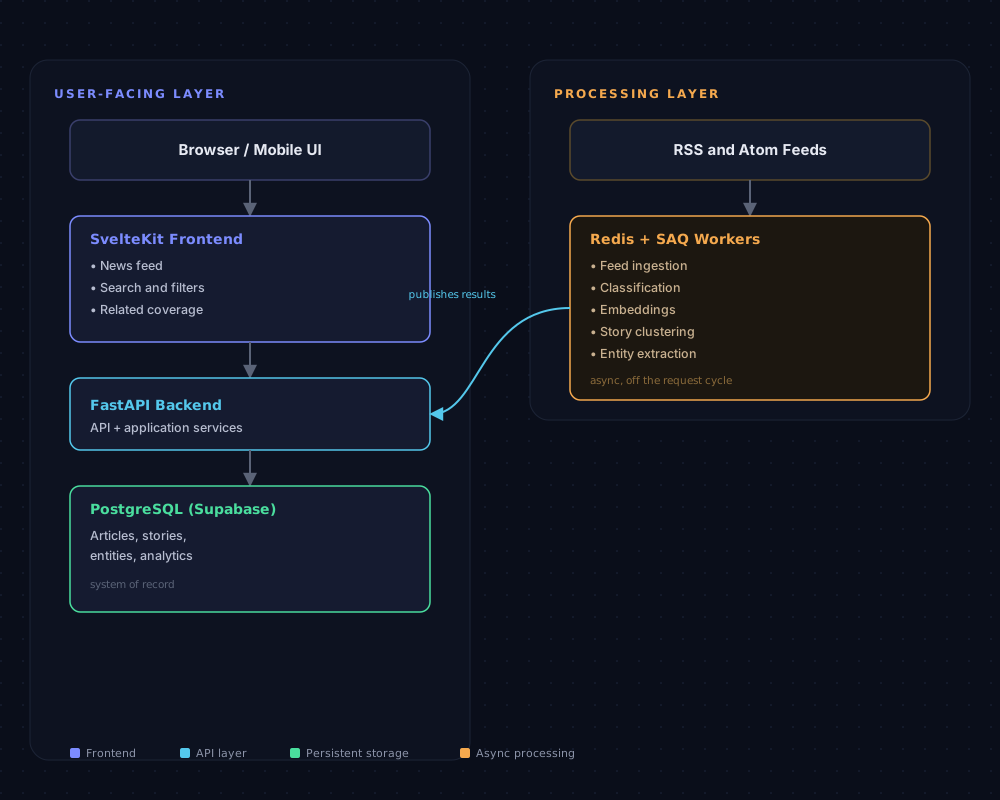
Axon Review is designed as more than a feed reader. At a high level, it behaves like an AI signal-processing system: raw coverage enters the platform, machine learning adds structure, related reporting is organized into stories, and a separate LLM layer turns that structured evidence into publishable editorial output.
The public architecture below is intentionally simplified. It shows the major engineering boundaries without exposing model thresholds, prompts, scheduling logic, ranking rules, or other implementation details.
Architecture at a glance
              ┌────────────────────────┐
              │   Public AI sources    │
              └────────────┬───────────┘
                           ▼
              ┌────────────────────────┐
              │ Ingest + normalize     │
              │ clean • deduplicate    │
              └────────────┬───────────┘
                           ▼
┌────────────────────────────────────────────────┐
│ ASYNCHRONOUS INTELLIGENCE PLANE                │
│ relevance → taxonomy → embeddings → entities  │
│                         → story grouping       │
└──────────────────────────┬─────────────────────┘
                           ▼
              ┌────────────────────────┐
              │ Structured story layer │
              │ articles • stories     │
              │ metadata • signals     │
              └─────────┬────────┬─────┘
                        │        │
             ┌──────────┘        └────────────┐
             ▼                                ▼
   ┌───────────────────┐           ┌───────────────────┐
   │ API + web product │           │ LLM automations   │
   │ search • discovery│           │ Insights • social │
   └───────────────────┘           └───────────────────┘
ML first, LLMs where they add leverage
The core news pipeline uses multiple specialized stages rather than asking one general-purpose model to do everything. High-volume tasks such as AI relevance classification, topic organization, semantic representation, entity extraction, and story grouping are handled as distinct ML/NLP problems.
That separation matters. Deterministic or lightweight models are well suited to repeatable classification and retrieval work, while semantic models are better suited to comparing meaning across differently worded articles. The result is a structured story layer instead of a flat stream of links.
Compute-heavy work runs outside the user request path. Background workers can ingest, classify, enrich, and group content asynchronously while the web application remains focused on fast reads, search, filtering, and story discovery.
The LLM publishing layer
LLMs sit after the core intelligence pipeline, where they can operate on cleaner evidence.
Axon Review uses LLM-driven workflows to generate concise social updates and Daily Insights editorial drafts from structured story data. These workflows are treated as production software rather than one-off prompts: outputs are schema-constrained, publication state is tracked, duplicate and quality checks are applied, failures can be retried, and review controls can be inserted before publication.
This architecture keeps generative AI useful without making the entire platform dependent on it. The ML pipeline creates structure; the LLM layer turns that structure into higher-level communication.
Serving the product
A Python API layer exposes the processed data to a SvelteKit frontend, while PostgreSQL acts as the durable system of record. Queue-backed workers handle asynchronous processing and automation.
The larger design principle is simple:
Use the cheapest reliable intelligence for each stage, isolate expensive work from the request path, and give LLMs structured context instead of raw chaos.
That hybrid approach is what allows Axon Review to function as both a news product and an applied AI/ML system.